
“Why we joined SoundChoice”: a clinician’s perspective
Hayley Clements, owner of Just Hearing in Derby, shares her perspective on why being a SoundChoice partner is important for her as a clinician, advocate and small business owner
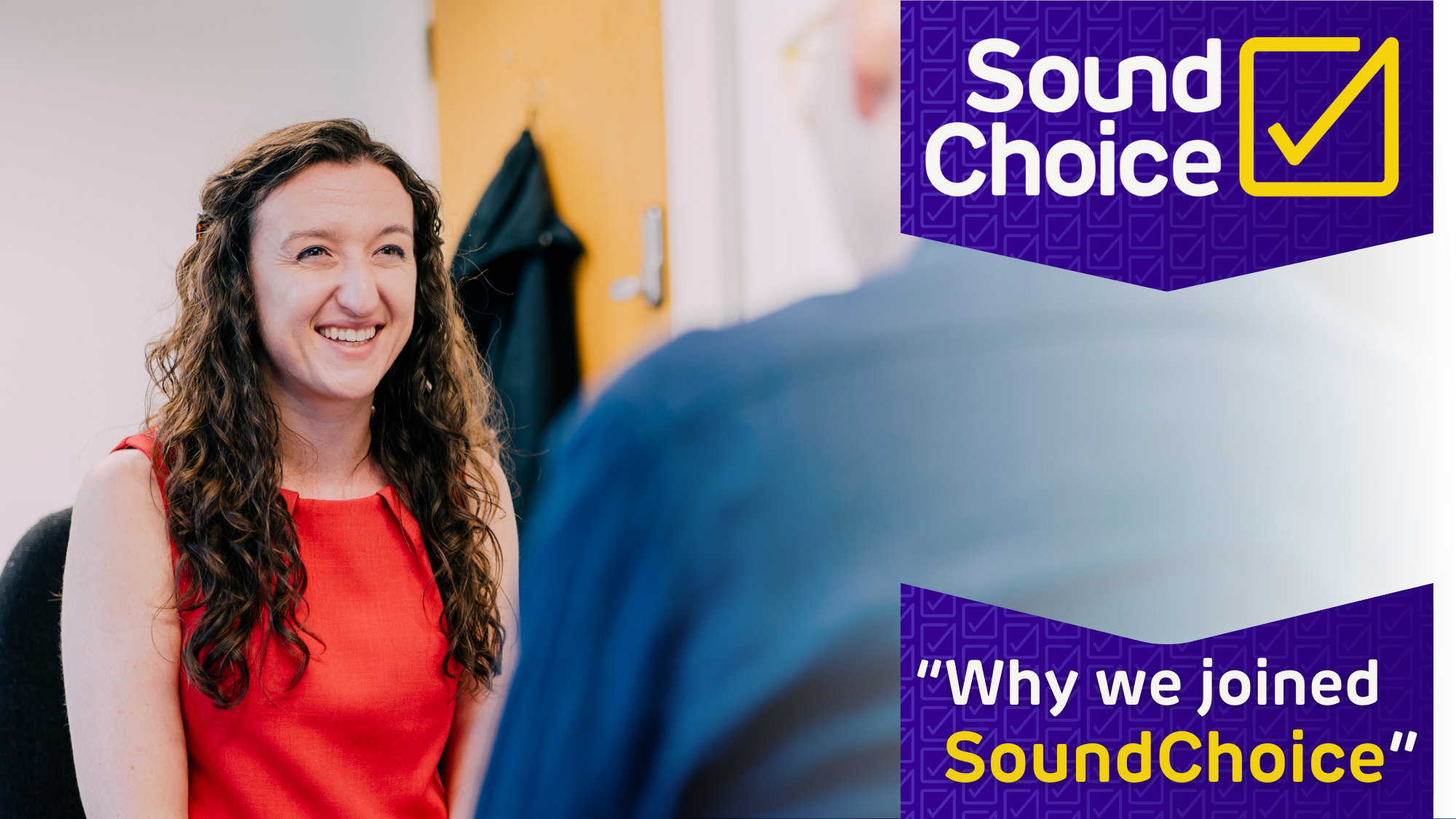
Independent audiology clinics play a vital role in supporting people with tinnitus – but many clinicians and small business owners still feel disconnected from the wider tinnitus community.
To help bridge that gap, Tinnitus UK has launched SoundChoice, a new quality mark recognising clinics that are committed to high-quality tinnitus care and community engagement.
Diving deeper, Danny Knight spoke to Hayley Clements, audiologist and owner of Just Hearing, about why she decided to become a SoundChoice partner and what it means for small clinics.
Hayley, could you start by telling us a little about yourself and your clinic?
Of course! I’m Hayley Clements, the owner and audiologist at Just Hearing in Derby.
We’re a small independent team – myself, another audiologist called Lauren, and Samantha on reception who greets everyone when they arrive.
Because we’re a small team, we really get to know our patients. Many of the people we see come to us because they’re struggling with tinnitus and often feel they haven’t been listened to elsewhere.
Unfortunately, we still hear from people who have been told that “nothing can be done.” That’s really difficult for patients to hear, and it just isn’t true. So that’s what we focus on – helping people manage their tinnitus and find the things that work for them.
So Hayley, Just Hearing is a small, independent clinic. What motivated you to get involved with SoundChoice?
For me, it was about being part of something bigger.
As independent clinicians, we’re often working in small teams and focusing on our local patients. That’s wonderful, but it can sometimes feel a bit isolated.
Being connected to Tinnitus UK through SoundChoice means we’re part of a national effort to improve tinnitus care and awareness. That’s incredibly valuable – both for clinicians and for patients.
It also reassures patients that we’re committed to evidence-based tinnitus care and that we’re linked into the wider support network.
"It’s about recognising that tinnitus care is a shared effort across clinicians, charities, researchers, and patient communities."
You’re also a business owner, so what benefits do you see in joining SoundChoice?
Ultimately, it means we can help more people.
SoundChoice helps patients identify clinics that care about the tinnitus community. A lot of places mention tinnitus, but the level of expertise and support can vary.
It also signals that a clinic is making a real commitment to tinnitus care.
Secondly, it helps highlight what independent clinics like ours can offer. Because we’re not tied into a rigid system, we can spend more time with patients and take a more holistic approach than they might find elsewhere.
That flexibility can be a huge advantage when supporting someone with a complex condition like tinnitus, and if we can help people understand that, it means more people coming through our door, accessing the support they need.
Some clinicians might feel unsure about how to engage with the tinnitus community. What would you say to them?
I’d say it can actually be much simpler than people think.
You don’t need to reinvent the wheel or run huge programmes. Sometimes it’s about small steps – becoming aware of the resources already available in your area.
For example, when I moved to Derby, I made a point of looking into local tinnitus support groups and research opportunities. Once you know what’s there, it becomes much easier to signpost patients.
Even something as simple as directing patients to reliable information from Tinnitus UK can make a big difference.
 Hayley and other tinnitus advocates at the House of Lords during Tinnitus Week
Why is that connection to the wider community so important?
Because tinnitus support doesn’t stop when a patient leaves the clinic.
Many people benefit from ongoing resources such as support groups, helplines, educational materials, or research opportunities.
If clinicians are aware of those options, we can guide patients towards them. That not only improves patient outcomes, but also strengthens the overall tinnitus support network.
It’s about recognising that tinnitus care is a shared effort across clinicians, charities, researchers, and patient communities.
What practical steps can clinics take to strengthen their tinnitus support?
One of the most important things is simply taking the time to listen.
Patients with tinnitus often arrive feeling frustrated or dismissed. Giving them the opportunity to explain how tinnitus affects them can be incredibly powerful.
From there, I like to work with patients to build a “toolbox” of management strategies. That might include sound therapy, hearing technology if appropriate, relaxation techniques, sleep strategies, or education about how tinnitus works.
The key is tailoring support to the individual rather than assuming one solution will fit everyone.
"Ultimately, it means we can help more people."
You mentioned research earlier. Is that something clinics can engage with more easily?
Definitely.
You don’t have to run research studies yourself to support research. Simply being aware of studies happening locally and letting patients know about them can be hugely valuable.
In Derby, we’re quite close the Nottingham, and the university is one of the best for tinnitus studies. When we hear about them, we can pass that information on to interested patients.
It helps patients feel like they’re contributing to the future of tinnitus care.
Finally, what would you say to other independent clinics considering SoundChoice?
I’d encourage them to look at it seriously.
SoundChoice is about more than a badge – it’s about demonstrating a commitment to responsible tinnitus care and connecting with the wider tinnitus sector.
For small clinics especially, that connection can be really powerful. It reinforces trust with patients and helps ensure we’re all working toward the same goal: improving the lives of people with tinnitus.
And ultimately, that’s what matters most.