
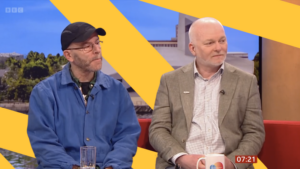
Tinnitus Week 2026 is already making noise! On Monday Tinnitus UK CEO Alex Brooks-Johnson appeared on BBC Breakfast alongside drummer Rupert Brown, bringing the reality of tinnitus and the urgent need for change in live music directly to a national audience.
Appearing on one of the UK’s most-watched news programmes is a powerful moment for the campaign. It signals that tinnitus is not a niche issue, but a widespread, life-altering condition that deserves serious public and policy attention.
“I thought my life was over”
During the interview, Rupert spoke candidly about the moment his tinnitus began and the shock of how quickly life can change.
Recalling a performance at Ronnie Scott’s Jazz Club, Rupert described coming off stage to a barrage of sound that didn’t fade.
“When I was at Ronnie Scott’s jazz club, a fantastic place, working with a jazz legend, I came off stage, and I had eight different tinnitus sounds,” he said.
“And if you can imagine being on Bishop’s Rock lighthouse, and you’ve got these whirling helicopters, crashing waves, there are bells from a church tower… I nearly passed out. I had a perforated eardrum, and I thought my life was over.”
Rupert went on to describe the fear and disbelief that followed, and the desperation of trying to escape a sound that would not stop.
“I just couldn’t accept this new reality. It was just terrible. I remember sleeping to Kate Bush that night, I had it on 10, and it wasn’t loud enough to drown it out.”
It was a raw, honest account of what tinnitus can do to someone whose life and identity are built around sound, and a reminder of why prevention, support, and awareness matter so deeply.
Why Live Music and Tinnitus is the focus for 2026
Following extensive surveying carried out over the summer, with responses from across the music-loving community, Tinnitus Week 2026 is centred on Live Music and Tinnitus.
Tinnitus UK has gathered insights from industry professionals, gigging artists, venue staff, and dedicated fans and festival-goers. Together, these voices are shaping a major, evidence-led campaign on hearing health, safer listening, and the real impact of sound exposure.
The findings show clearly that tinnitus linked to live music is widespread, often preventable, and still too easily dismissed as an unavoidable side effect of enjoying culture.
What’s happening during Tinnitus Week
Throughout Tinnitus Week 2026, we’ll be spotlighting the connection between tinnitus, hearing wellness, and live music through a series of high-impact activities, including:
• The launch of new research at the House of Lords, bringing evidence and lived experience directly to policymakers
• Quiet Night Out, a special live music event at London’s iconic Union Chapel, designed with tinnitus and sound sensitivity in mind
• Extended support services, resources, and awareness-raising initiatives for people affected by tinnitus
Each element is designed to reinforce the same message: live music does not have to come at the cost of hearing, wellbeing, or mental health.
Our aim
Our aim is simple. We want to better support people living with tinnitus today, while helping to prevent future harm by changing how live music approaches sound.
People should not have to choose between the music they love and their hearing health. With the right awareness, evidence, and action, lives can remain full of music, culture, and connection.
Watch this space for more announcements as Tinnitus Week 2026 continues to unfold.
You can watch the BBC interview here: