
One year on: How Tinnitus UK has delivered on 2025 report recommendations
12 months on from Tinnitus Week 2025, we take a look at how Tinnitus UK has delivered on our commitments, and where we're still making progress

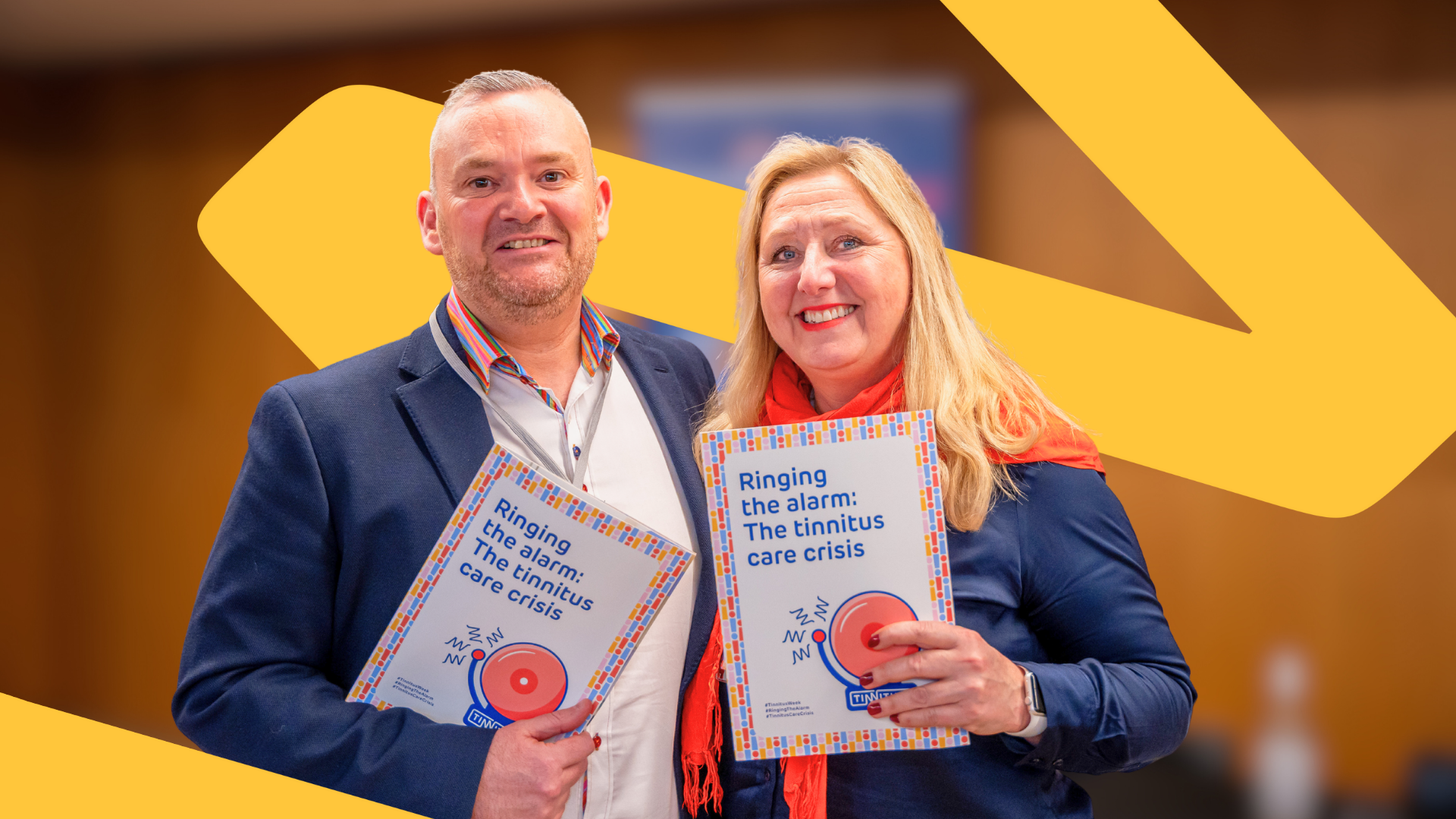
Since publishing our Tinnitus Week report one year ago, Ringing the Alarm: The tinnitus care crisis, Tinnitus UK has worked to implement real change across the healthcare sector.
The report outlined six strategic recommendations aimed at improving the consistency, quality, and accessibility of tinnitus care, in line with the national Tinnitus UK strategy.
Here, we explore how Tinnitus UK has been working towards each recommendation, including evidence of progress and areas where more needs to be done.
A massive thank you to all our partners and collaborators for making this work possible. We will not give up – and we know that they will not either.
1. Fully Embed NICE Guidelines in Clinical Practice
The first recommendation called for clinicians to fully adhere to NICE guidelines for tinnitus assessment and treatment and for employers to ensure their teams are up to date with best practices. NICE’s tinnitus guideline, NG155: Tinnitus: assessment and management, provides a comprehensive framework for how tinnitus should be assessed, investigated, and managed across primary, community, and secondary care settings.
What Tinnitus UK Has Done
Education and awareness:
Tinnitus UK made access to all webinars free, including a session titled “NICE Guidelines: What does this mean for me?” which explores the implications of NICE’s recommendations for patients, clinicians, and others supporting people with tinnitus.
This type of outreach helps clinicians and professionals better understand how the guidelines should be applied in practice, which is a key step toward embedding them more fully across services.
Resources:
In addition, we have refreshed the Tinnitus Decision Aid, a free resource which can be used by patients and clinicians to help guide tinnitus care. The resource is available for free here.
Where Progress Is Still Evolving
We have also been developing joint position statements with audiology professional bodies, which will give a stronger basis for future actions.

2. Recognise and Share Best Practices in Tinnitus Care
The second recommendation focused on celebrating and sharing effective tinnitus care practices – learning from high-performing NHS and private departments and spreading those models across the UK.
What Tinnitus UK Has Done
Annual Conferences and Professional Events:
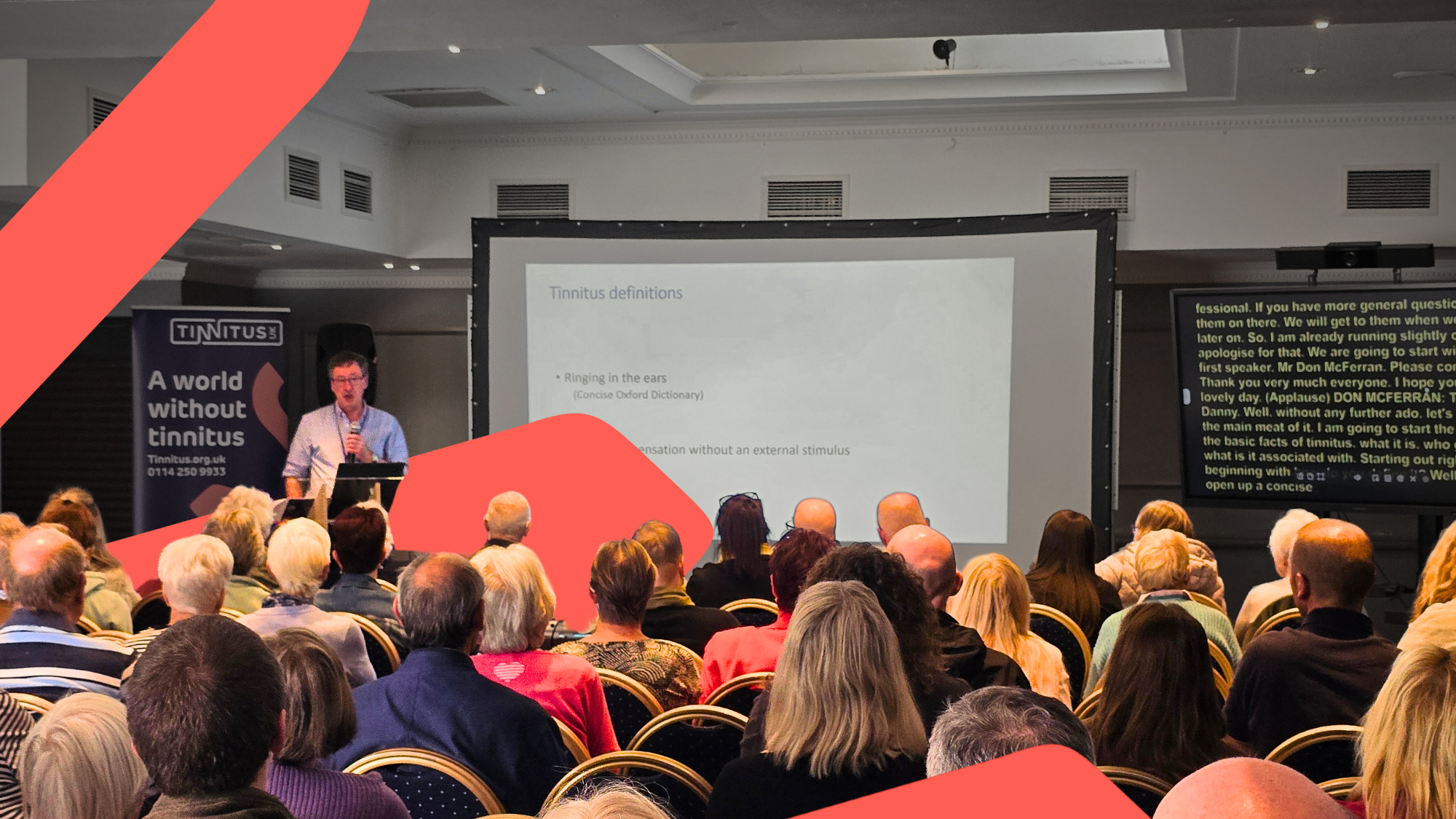
In 2025, Tinnitus UK ran its annual Tinnitus Conference (held in Birmingham and online) designed to bring together clinicians, researchers, and health professionals. This conference focused on excellence in care, and with over 100 delegates was a brilliant opportunity to share best practice.
Tinnitus UK is grateful to BAA, AIHHP, Specsavers, Amplify, Hidden Hearing and all the other organisations who hosted us at their conferences this year. In total, our team met over 1,000 professional delegates and discussed best practice – and even more events are to follow.
Training Events and Workshops:
We also established the Tinnitus Professional Network, a peer-to-peer group for everyone supporting tinnitus patients. The group now has over 150 members and has met 6 times to discuss topics including paediatric tinnitus, sound therapy, and the relationship between tinnitus and menopause.
The new Training & Events Hub highlights regular courses, workshops, and networking opportunities where professionals can meet and discuss best practice approaches in tinnitus care. This supports professionals in exchanging insights on what works and establishing consistent care models.

3. Foster Cross-Industry Collaboration
The report stressed the need for greater collaboration between professional organisations such as BSA, BAA, BSHAA, AIHHP, ENT UK, and also bodies like the BABCP/BPS to support accredited CBT pathways and elevate care across NHS and private sectors.
What Tinnitus UK Has Done
Presence at Major Events:
We are very excited to be taking the conversation to the heart of UK government with the launch of Amplifying Awareness, our Tinnitus Week 2026 report, at the House of Lords on Wednesday 4th February. This event is bringing together our partners and new collaborators from across audiology, government, media and public sector care, as well as Tinnitus UK Members. A huge thanks to everyone for their support.
Tinnitus UK’s participation as an exhibitor at major professional events like the BAA Conference and AIHHP Expo demonstrates continued engagement with key sectors in audiology, health, and hearing care – fostering professional dialogue and partnerships. We will also be present at more conferences this year.
Partnerships in Research:
Tinnitus UK is listed as a partner charity with Our Future Health, the UK’s large health research programme, meaning the organisation now contributes expertise to broader health research collaborations. This expands its network beyond audiology into multi-disciplinary research partnerships.
We have rekindled and deepened our working relationships with research institutions including the Universities of Manchester, Nottingham, UCL and Aston, as well as industry partners and other tinnitus patient voice groups.
International Collaboration:
Tinnitus UK’s involvement alongside ENT UK, BSA, BAA, and AIHHP in the 4th World Tinnitus Congress and International Tinnitus Seminar further reflects cross-industry engagement internationally, which can help elevate standards and share research.
In addition, our closer working relationship with the American Tinnitus Association (ATA) and Tinnitus Quest is ensuring a more coherent international approach to tinnitus.
Where Progress Is Still Evolving
While conversations are ongoing with sector-specialists, we are still working towards an accredited audiologist-led CBT pathway in collaboration with appropriate industry partners.
4. Standardise Tinnitus Education and CPD Programmes
Standardisation of professional education and continuing professional development (CPD) around tinnitus care was a central recommendation.
What Tinnitus UK Has Done
Training Hub and Courses:
Tinnitus UK’s Training & Events Hub is directly aimed at providing professional learning opportunities designed around evidence-based content and multidisciplinary insight. This includes practical tools, workshops, and networking opportunities to help clinicians improve their knowledge and skills in tinnitus care.
Themed Courses:
New courses like the Tinnitus Awareness, for Psychologists & CBT-accredited therapists, and Counselling for Tinnitus Skills demonstrate a concrete step toward expanding CPD offerings that are more focused on the complexities of tinnitus management, including counselling and psychological aspects.
Where Progress Is Still Evolving
There will be more courses this year following a Training and CPD strategy, designed in collaboration with existing providers and higher-education institutions.
5. Align Curricula with Best Practices
This recommendation was aimed specifically at aligning audiology and related course curricula with NICE and BSA practice guidance to ensure new graduates are better prepared to manage tinnitus.
What Tinnitus UK has done
Following discussions with higher education institutions across the country, we’re championing giving tinnitus a permanent place on audiology qualifications, including undergraduate degrees and the Scientist Training Programme (STP).
We are also collaborating closely with institutions who are interested in launching new courses, including Leeds Trinity University and Lancaster.
Where Progress Is Still Evolving
We are still working towards formal guidance on CPD standards and revision of curricula. The charity’s events and training are valuable, though we are aware they aren’t the same as revised university-level programmes. However, progress continues, and we look forward to updating you as soon as we can.
6. Upskill the Workforce
The final recommendation focused on encouraging employers to prioritise tinnitus education and support professional engagement with CPD.
What Tinnitus UK Has Done
CPD-Centred Events:
Through the Training Hub, Tinnitus Professional Network, webinars and more, Tinnitus UK continues to offer professional development for clinicians, support workers, and others involved in tinnitus care.
Promotion Through Professional Gatherings:
Their presence at professional conferences signals an active engagement to encourage clinicians and employers to recognise the importance of continuous learning in tinnitus care.
Where Progress Is Still Evolving
While these opportunities and resources are available, we are still working on new ways to track workforce uptake of tinnitus-specific CPD, employer engagement levels, and improvements in frontline clinician competencies. We intend to improve this in future, as demonstrating a clear impact is crucial to ensure we continue to build trust, gather momentum, and achieve a world without tinnitus.

Conclusion
With the support of dozens of partners, Tinnitus UK has made notable strides in promoting education, professional engagement, cross-sector collaborations, and discourse around NICE guideline implementation since Tinnitus Week 2025.
Activities such as webinars, training programmes, conference participation, and new partnerships with large research bodies all signal progress – particularly in raising awareness and building professional networks.
However, we know we still have work to do, including publishing hard metrics and documenting systemic changes. Our work lays strong foundations for continuous improvement, and tracking and reporting will be vital in the coming years to demonstrate that care standards are elevating in practice.
We thank you for all your support in the last 12 months, and promise that in Tinnitus Week 2027, we’ll be able to share even more exciting progress.